I wrote just over a month ago about how Virgin Media had had a major outage, and it dragged on for days. I thought we were up-and-running again.
Then, around midnight on Sunday, Outlook told me it couldn’t connect to the email server. It was still doing it when I got up Monday. And to cut to the chase, it is still doing it now – Tuesday midday.
No f*cking email whatsoever for a day and a half so far.
I went to Downdetector and saw that everyone else was having problems. Many of them had contacted support, and as the day passed had been told it would all be fixed by 2.10pm, 4.20pm, 7.30pm… and I gave up checking after that.
After the last outage, I’d drafted a letter to Virgin’s Head Office, but I didn’t send it once everything was working. Well, I’m sending it this time.
Update: Email went down late Saturday/early Sunday (17/18 June). Virgin gave repeated fix times throughout Monday and Tuesday, and missed every one of them. By Wednesday (21 June), they have given up on giving ETAs to miss, and have now said Friday (23rd).
I placed my order with Reolink in the early hours of Monday 5 June. The package arrived on the morning of 7 June – though I was still in bed and missed it (in part due to the Ring not sending chime alerts anymore), so they re-delivered on 8 June. Obviously, this is UK stock.
You will remember what I said in Part I about being an early adopter. I had emailed Reolink to confirm that the doorbell would connect to third-party equipment (they told me it would, and even provided a link to a guide on how to connect it to Surveillance Station, which is the security software I use). I also asked about being able to buy additional chimes.
The response to this was not what I’d hoped – but was what I had pretty much worked out for myself when I ordered: at this time, the doorbell only supports one chime unit. It’s not a showstopper, and I am certain that support for multiple chimes will be added in future firmware updates, since it is bound to be a popular user request.
The first important detail is its size. It is only 48mm wide, compared with the Ring’s 60mm. As a result, it will fit on the flat 50mm part of my uPVC doorframe on my house where bell pushes are supposed to go in the UK, instead of side-mounted on the porch wall using stacked wedges to get the correct FOV (field of view), which I had to do to install the Ring. The Reolink comes with a mounting plate and a 15° wedge (mounting screws are included). The wedge is so that it can be angled slightly to point towards the visitor instead of straight forward.
Ring seems to cater primarily for American customers, who can usually fit them anywhere convenient along wooden outside walls. In the UK, walls are usually made of brick, and doors are often recessed into porch ways and have quite narrow door jambs, beyond which it is brick. Even in new-builds, with doors that open directly on to the street, the jambs are still narrow. Obviously, screwing something into wood or uPVC is quite easy, whereas brick requires a hammer drill and Rawlplugs. The Ring doorbell doesn’t fit the standard UK door jamb (it’s too wide), and needs to be wall mounted in most cases, which is what I had to do in 2020, using multiple wedges to get a good viewing angle from a 90° position relative to the door. If you have a Ring doorbell, people know you have a Ring doorbell, because it is big. In my case, it was even more obvious. The Reolink doorbell, by contrast, is relatively discreet and fits on to the jamb.
Early adopter comment: right now, the Reolink comes in black. I know that they will do a white one at some point – they’re going to have to – but mine is black, and will go on a white uPVC doorframe. Again, this is not a showstopper for me, but bear it in mind.
Unboxing: It comes in a neat box with a security seal. I draw your attention to the message on the inner lid – to download the Reolink app when you do the initial install. Any camera which has inbuilt security uses a similar method – you can’t just plug in your ethernet cable and expect it to work, because it is almost guaranteed not to (my experience installing Hikvision CCTV cameras taught me that).
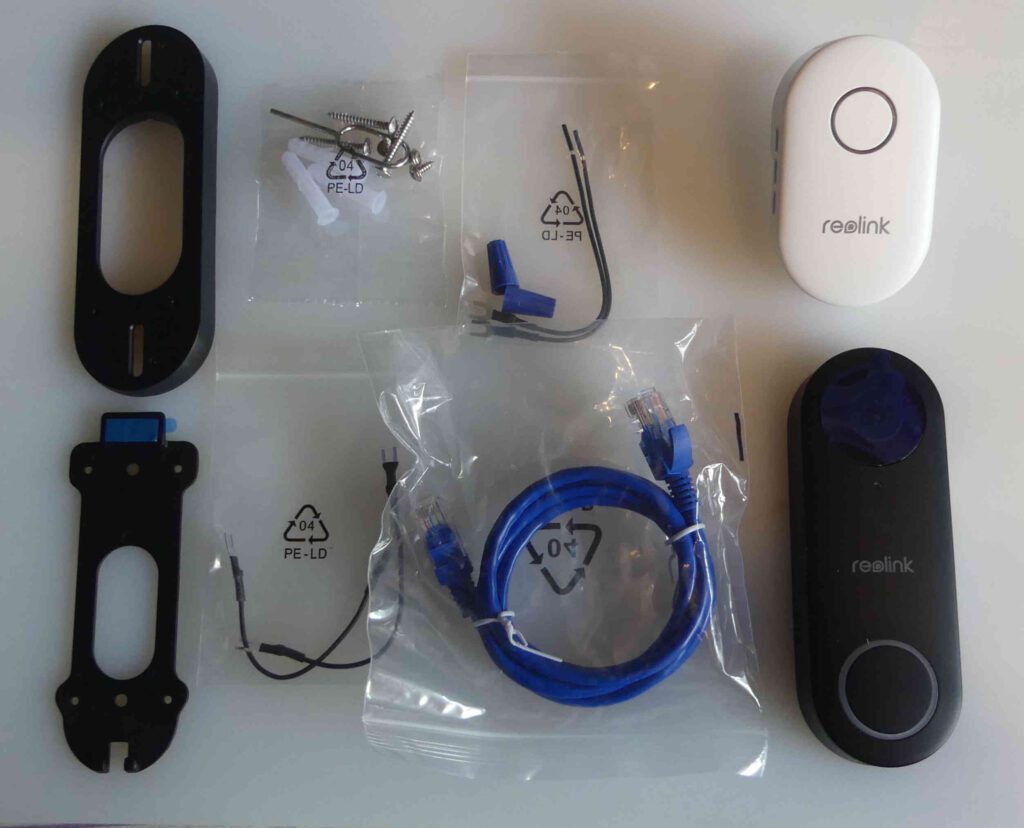
Inside, there is an envelope containing the instruction manuals for the bell and the chime. The doorbell and the chime unit are underneath this, and in the lower compartment you have a short ethernet cable, the mounting plate and optional 15° wedge, a pack of screws and Rawlplugs, and two packs containing spade-ended cables for powering it using a transformer (those will be surplus to my requirements).
Initial Setup: I downloaded and installed the Reolink app on my Android smartphone, and set up an account on it.
The next part was a simple three-step process.
connect the camera to a PoE network switch
add a device on the app
plug in the chime
At each stage, there are clear on-screen instructions. Mine connected flawlessly first time. It was far less problematic than when I installed the Ring – which repeatedly refused to connect, and took multiple attempts to get the install process to run through to completion. And let me repeat for clarity: you need a PoE network switch or a PoE injector. A normal ethernet port does not supply power over ethernet.
Early adopter comment: right now, I have it powered using the supplied ethernet cable. This cable is somewhat more flexible than the ones I normally use, but it also has a shorter strain relief grommet. I will likely have to do a little careful trimming with a scalpel to shorten the grommets on my outdoor ethernet cable, because they are too long to get into the PoE socket on the doorbell as they are (they also cause problems when using waterproof ethernet enclosures).
So, I had a working doorbell system on my phone and with the chime.
Setting up with Synology Surveillance Station: Having the camera working through my network and accessible on Surveillance Station (SSS) was absolutely the most critical part, and the whole reason I purchased the Reolink. And it was where things didn’t go quite as smoothly as I’d hoped – at first.
I checked my router and found the camera’s IP address. It was quite a low number, but fortunately wasn’t conflicting with anything. Nevertheless, I logged into the camera’s settings and switched it to ‘static IP’, then chose a number in the range I use for my other CCTV cameras. I strongly advise you do this, since having dynamically assigned IP addresses has caused me headaches in the past (I know from experience that if a camera suddenly chooses the same IP address that Sky is using, then you lose Sky and have problems with the camera).
Normally, once an ONVIF camera has been established on the network, all you do in SSS is ‘add’ a new camera, it scans, and finds it. You then select it, enter the necessary details, it activates, and you’re done.
SSS could not find the Reolink automatically, no matter how many times I scanned. So I moved on to option #2 in Reolink’s helpful guide to setting up in SSS, and entered everything manually. This time, and after several further failed attempts, I managed to ‘authenticate’ the settings (that means SSS has made successful contact with the camera), saw a tantalising thumbnail, then after trying to activate it the camera showed as ‘disconnected’. And nothing I tried would make it connect.
I now resorted to Google. Reolink instructs you to choose HTTP and Port 80 when setting up, and to use the camera model RLC-510A. But I discovered on Reddit that others who had been early adopters had found that HTTPS and Port 443 works. When I tried again using those settings, BINGO – it connected.
I should also point out that you need to log into the camera’s dashboard via its IP address and change a few advanced settings in there – notably, activating HTTP, ONVIF, and RTSP.
Another piece of advice. Get things working on a desk in front of you before putting the camera in it’s intended location. You absolutely do not want to screw it on to a wall, only to find out you’ve got to get access to the back of it again.
Setting up the Desktop App: This is fairly straightforward. You simply download the Reolink app and install it on your PC/laptop.
Early adopter comment: the app doesn’t receive push notifications yet. It just shows what your camera can see. As I commented on another detail earlier, Reolink are simply going to have to introduce push notifications – which are already available on the wi-fi version of this camera. You have to accept these minor details if you’re an early adopter!
So all I have to do now is run the cable and position the doorbell where I need it. Right now, the doorbell is on extended test next to me while I run the cables.
I’ll link to Part III of this series once it is in place and working as intended.
It’s late spring 2023 and this article is showing increased interest again. We haven’t got anywhere near last year’s temperatures yet, and until May there was no real need to water, since it had been quite wet. As of late May, though, I have commenced regular watering and feeding – the first feed, in particular, seemed to prompt my tree to throw out a lot of new leaves.
The following is the original article… but remember: water, water, water. And feed!
Back in 2014, when I originally wrote this, our Birch tree suddenly began to produce a lot of yellow leaves in mid-June. After a lot of research I managed to figure out the possible causes and the remedies. That was the purpose of the original article.
However, 2018 threw up a new issue. It turned out to be the hottest year on record, but even before we found that out people will remember how hot it was, and for how long it stayed like that. My tree once again began to show a few sprays of yellow fairly early in the season.
The article becomes popular each year, firstly in late Spring and early Summer, then again later in the season closer to Autumn.
In 2014, I identified the following as likely causes of premature yellowing:
nutrient deficiency
iron deficiency
manganese deficiency
After the 2018 heatwave, I further identified lack of water as a major factor. With hindsight, it may have also been a factor in that 2014 season, but nothing compared with 2018 for prolonged heat and lack of rain.
When I first experienced yellowing back in 2014, I initially thought my tree was dying. Googling for an answer was pretty much useless, because most of the technical advice is American and focuses on the Bronze Birch Borer (a beetle that feeds on white birches), which isn’t known outside of North America. But somewhere in among the advice, I came across a simple comment – and I don’t recall where I saw it now – that made a lot more sense.
In a nutshell, premature yellowing/leaf drop can be caused by nutrient and iron deficiencies in the soil. This comes about over a period of time as fallen leaves are swept up each year and sent to the tip, so none of the nutrients are returned to the soil. Consequently, the soil becomes depleted of them.
Birches are ericaceous – lime-hating – plants, and prefer a slightly acidic soil. As such, you need to feed them using ericaceous fertiliser. I first used Miracle-Gro solid fertiliser, intended for Azaleas and Rhododendrons (also lime-hating), but a couple of years later switched to Doff liquid feed so I could use it in my Access Irrigation Static Dilutor. I also got hold of some Maxicrop Seaweed Extract, which is also liquid, and watered that in at the same time.My original problem showed itself as canary-yellow leaves, either in sprays, or randomly dotted throughout the canopy. On closer inspection, some of the leaves looked like those in the photograph here.
This is known as chlorosis. Leaves are usually green because they contain chlorophyll – and chlorophyll is green. Chlorophyll is what allows plants to convert light energy into sugars that they can use as food through the process called photosynthesis. Plants use iron to produce chlorophyll, so if there isn’t enough iron in the soil the tree can’t make enough chlorophyll, and you get yellowed leaves. The tree compensates for being hungry (if it hasn’t got chlorophyll it can’t make food for energy) by going into shutdown and shedding those leaves. And you may also find that new leaves are small and misshapen when chlorosis is the issue.
You can easily treat chlorosis using sequestered iron (or seaweed extract). Being ‘sequestered’, the tree can suck the iron up and use it right away. A longer term solution is to use iron sulphate lawn feed, which also slightly acidifies the soil over time.
I also bought some manganese to water in the first time, but I am not sure how relevant that was. I used it for a couple of seasons, but stopped. Each year, I simply feed the tree once or twice a month between March and September using fertiliser and seaweed extract.
Note that none of these problems are confined to Silver Birches. All trees and plants can be affected by nutrient deficiencies, and you simply have to deal with the problem using the appropriate, easily purchased treatments.
In that first season, a single application of fertiliser stopped the leaf drop almost immediately. Once the already-yellow leaves had fallen, the tree remained green until Autumn, and even threw out some large new leaves and fat catkins. It obviously liked what I had done to it, and I continued doing it from June until September every few weeks.
Everything was fine until the hot summer of 2018. You might recall that the prolonged heatwave began quite early, and by the end of June I was again noticing a few sprays of yellow. I wasn’t a nutrient issue this time – I was feeding the tree regularly – but I’d already guessed the hot weather might have something to do with it, and a bit more research showed that heat stress in trees is a real issue, and Birches are highly susceptible to it.
It turns out that lack of moisture in the ground combined with prolonged high air temperatures causes trees – and especially Birches – to become stressed, which again triggers them to go into emergency shutdown by shedding leaves.
My research provided two options for getting water down to the roots (which fortunately, in the case of Birches, is quite shallow). One involved hammering at least half a dozen hollow spikes into the ground around the tree and dripping water directly down to them. I decided against that on the basis that a) the ground was already as hard as iron plate, b) anything which sounds so simple (i.e. hammering a hollow plastic spike into the soil) was going to turn into a nightmare of split plastic, only being able to get part way down, and discovering chunks of bedrock I didn’t know were there, and c) having these things poking out of the lawn would look bloody awful even if I got them in (and even worse if they only went in part-way). The easier option was to commence heavy-watering immediately – basically, to run the sprinklers for hours at a time every night.
That method fixed the problem in less than a week.
With hindsight, it is quite possible that lack of moisture was a contributing factor back in 2014, and my feeding routine would have dealt with that automatically (though I did have chlorosis). But in 2018, it was definitely just the result of too little moisture around the roots.
So, to summarise. If you experience premature leave-yellowing, the very first thing you should do is water like crazy. Don’t worry about over-watering too much – Birches like wet soil, which is why they grow near streams. Just don’t turn your garden into a swamp. While you’re doing that, buy some ericaceous feed and seaweed extract, and get that into your soil as soon as possible (how much depends on how big your tree is).
Can you rescue leaves which have turned yellow?
No, probably not. I suppose that chlorosis could be reversed if you caught it early enough, but if the leaf is dead and the tree has triggered its shedding mechanism, you’re going to lose them.
The important thing is that by feeding and watering the tree you can stop any further yellowing – and believe me, the first time you do it the effects will be quite noticeable within a short time.
Do you have to keep treating the trees?
Yes. If you don’t, the problem just comes back once the tree has used up what you’ve fed it, especially if you bin the leaves again the following autumn. Huge trees will suck up all the nutrients and water, and if you’re raking up and binning the leaves each year (or if the soil is dry and there are no prolonged periods of rain) nothing gets returned to the soil.
How often should you feed?
Treat them once or twice a month from March until September. And water regularly.
Can heat and drought cause them to lose leaves?
Yes. If they are stressed you may get them dropping leaves. In extreme cases the leaves can go brown and the tree can even die. It’s a good idea to water them deeply during hot, dry periods. Once or twice a week should be enough, though more frequently won’t hurt if the dry period is prolonged.
Remember that after a period of drought (or prolonged dry weather) it needs an extended period of rain to wet the soil again, especially deep down. A few heavy downpours won’t do it, and you will still need to help things along.
Will a Birch recover from drought?
It depends on whether the drought killed it or not. A reader wrote to me in 2018, mentioning that his tree had lost its leaves, and I advised that the only thing he could do right then was to feed and water – and hope for the best. He wrote to me in 2019 to tell me the tree had started to rock in the wind, and that a tree surgeon had subsequently declared it dead, and had had to remove it. Apparently, the roots were rotten.
There’s no way of knowing if it was just the drought that did the damage. The tree may have been weakened by not feeding and watering over previous years, and the drought was just the final nail in the coffin. But the 2018 heatwave certainly caused problems.
Is there any other way to deal with the problem?
You have to get nutrients and iron back into the soil. And you need water in order for the roots to be able to access those nutrients. Yes, you could use your own mulch or bought compost, but obviously this is not so attractive in a normal garden (removing it is what got you here in the first place). It would also take longer to have an effect. But it would still work, given time.
When do Birch trees normally start to shed their leaves?
In the Autumn! In the UK this is from around September-October, and the onset varies up and down the country. It often seems triggered by a noticeable drop in night time temperatures. The leaves will begin to fall from that point – very lightly at first, then increasing as the yellowing spreads.
Why do birch trees drop leaves so early?
They don’t. They drop them in Autumn, like all other trees which shed their leaves each year. If yours is turning early, you may have a problem.
How do you apply these treatments?
You make up the required solution as directed on the pack, then water it into the area specified. I use a combined watering/fertilising system, which I have written about separately. However, you can use a watering can and hosepipe/sprinkler as necessary. Note that if the ground is dry, a watering can won’t get the nutrients down to the roots, so a heavy watering is essential.
Why are fallen leaves sticky?
You’ve probably got greenfly! Specifically, the birch aphid, Euceraphis betulae. They feed on the European Birch, Betula pendula, and they increase in number during warm and dry weather. Aphids secrete honeydew as they feed, and that’s the sticky stuff you’re seeing. Apparently, you can get different species of greenfly that feed on specific trees.
You can kill them with a soap/water mixture, though no one has ever been able to tell me precisely how you apply that to a 20 metre high tree. And the same goes for any chemical method relying on direct contact. An alternative solution is to introduce predatory insects – something that eats aphids. The best one is the Ladybird larva, and you can buy them online. There are other predatory insects you can buy, too.
My tree is losing branches and twigs
If the tree is weak then it is understandable that twigs and small branches might fall off. Once they’re stronger this will stop. In any case, if it is windy, a few dead twigs are bound to fall off. It’s just nature – and birches also have a fungus which can cause small twigs to die and fall.
In the Spring, Crows can also be a problem if they’re nesting nearby. They are very, very selective in their choice of twigs for the purpose, and they will tear off dozens until they get the right one. It’s nature, so we don’t worry when they’re using ours for their twigs.
When do birches start to show leaves?
In Spring, obviously, but the precise date varies depending on both the tree and the weather. In 2019, they were about a month earlier than 2018 in the UK. Mine is usually showing leaves sometime during April each year.
I’ve got catkins but no leaves
Someone found the site in April 2018 with that query. You’ll probably find that in a couple of weeks you’ll have lots of leaves. As I have said in this article, I start feeding mine from March onwards. Leaves start sprouting a week or two earlier than my neighbours’ trees, and the foliage on mine is usually much denser. The catkins often come before the leaves.
Are the leaves changing early this year?
This was a generic search term used to find the blog in mid-July 2017. The short answer is no, they are not – not in July in the UK, anyway. They change towards the end of September in the UK.
Do Weeping Silver Birches lose their leaves in Autumn?
Yes.
When do Silver Birch leaves go all brown?
They don’t. The leaves should go yellow and fall off in the autumn.
I had quite a few visitors from this search term in 2018, and when I looked it up it seems that extreme cases of chlorosis and heat stress can result in leaves turning brown (see this supplementary article). It could also be a disease or infestation which you could treat, but the tree itself might also be dead – especially if it has been having any of the problems I mentioned above over previous years. Best to call in the experts.
Does this advice only apply to Silver Birch trees?
No. Chlorosis can affect many plants, and lack of nutrients is a universal issue. You might need a different fertiliser to address any nutrient problem, but iron will likely fix chlorosis. Lack of water can kill virtually any plant.
Back in 2020, I bought a Ring video doorbell and chime. The Ring is a wi-fi system, and it relies totally on Ring’s own cloud network. You cannot connect to it directly.
That wasn’t too much of a problem. It was necessary to buy range extenders for my home network to get a reliable connection (my router is upstairs at the back of the house, and the front door is downstairs at the front, so the signal was cripplingly weak), but I ended up with a ‘working’ system.
I used inverted commas there, because although it works, it does have a habit of dropping off the network, and needing a reboot of either it, or the range extender, or both (or maybe the entire network) – it’s done it as I write this – or of simply recording blank video when it detects a visitor, meaning you couldn’t see who came. The video can also be choppy and laggy – and if the internet goes down (well, your internet connection), it simply doesn’t work at all, because it has to be able to connect with the cloud to do so.
The problems are largely because it is wi-fi. I absolutely hate wi-fi at the best of times, and all my home networked stuff is hardwired wherever possible. I had tried wi-fi CCTV cameras, but they suffer the same problems – you need a strong network signal close to them. I also had similar issues with the Virgin Tivo box, because even sitting right next to the extender (the one I’d installed to fix the doorbell problems), the wi-fi network connection frequently decided it couldn’t connect properly. And Sky was the same. I fixed those by hardwiring them.
Now, one of the main selling points of the Ring system for me (offsetting the wi-fi downside) was the desktop app. It was a standalone app provided by Ring that allowed you to monitor the doorbell, and the advantage was that proximity and button press alerts came through almost immediately about 80-90% of the time. I spend most of my online time at my PC, and not hunched over my smartphone sending inane strings of emojis to hundreds of people I don’t know, so if someone comes to the door, I prefer my PC to tell me rather than my phone.
You see, the Ring doorbell system also has Chime units. You connect these to your network as well, and when someone comes to the door, the doorbell picks it up and tells the Chime units let you know wherever you have placed them. With the desktop app, the PC was another Chime system, which was useful when the two Chimes I had were installed in other rooms for the benefit of others in my family.
But a year or so ago, Ring announced it was going to discontinue the app and migrate everything to the cloud and a browser-based dashboard. I immediately knew this would cause problems, because it would cause further delays in the arrival of notifications – with the app, the doorbell spoke to the cloud, and the cloud spoke back and everything was triggered. There was a small delay (sometimes a long one), but not one that caused too many problems (though sometimes it did). By having a browser based system, absolutely everything was happening somewhere out there, and having to access it on the web meant going back out there to find it, then having ‘out there’ send it back to me. It’s not a real time system unless everything is perfect. As I said, if your internet connection goes down, you have no doorbell, because there’s no way to send anything out or get anything back. Oh yes, and let’s not forget the occasional problems at Ring’s end, with the cloud inaccessible – and Ring are just as bad as anyone else when it comes to announcing these episodes, or admitting to them).
The browser dashboard system was appallingly bad at the time, and Ring faced a huge backlash from owners. They delayed the switch-off of the app as a result, but it was still coming. As a result of all this, I started looking for alternatives. The panacea was an ONVIF camera which connected via PoE. ONVIF is a standard by which you can tap directly into the camera stream, and PoE means ‘power over Ethernet’ (you just plug the camera into your network using a cable, and it is supplied with both power and two-way data transfer. Note: you need a PoE switch or injector to provide the power. A standard ethernet port won’t work). The Ring system is entirely proprietary, and you can only access the camera stream and recorded footage through Ring’s own cloud system (and if you want recordings to be saved, you also have to pay an annual subscription – which galls when all it has done is record 20 seconds of black screen).
At that time, ONVIF/PoE doorbell cameras were almost non-existent, so I wrote about my intentions to build my own video doorbell camera. That idea got derailed when it occurred to me that a normal CCTV camera could do the job involving a lot less hassle, and although I have trialled that, the bloody problem is being able to get a suitable CCTV camera with a lens that works for close ups – there’s no real need for them, so they don’t exist. Oh, the cameras I’ve trialled do work, but the field of vision is just not right – if you want to see someone standing at the door, you need a very wide angle and not a zoom of any sort.
However, last week the Ring app began showing pop-ups declaring that it would cease to function in early June. Today, mine stopped working – and as I mentioned earlier, the f***ing thing has gone offline again. The final straw had arrived.
Last night, I was still prepared to go with the CCTV idea. After all, it worked, and if I moved the camera away from the front door to a place more to the right it would at least show me more detail. It wasn’t the best option, because you really need the camera near where the bell-push button is. But I decided to do another Google, and I was surprised to find that – now – ONVIF/PoE doorbells actually exist. They’re new, and it means being an early adopter, but they exist.
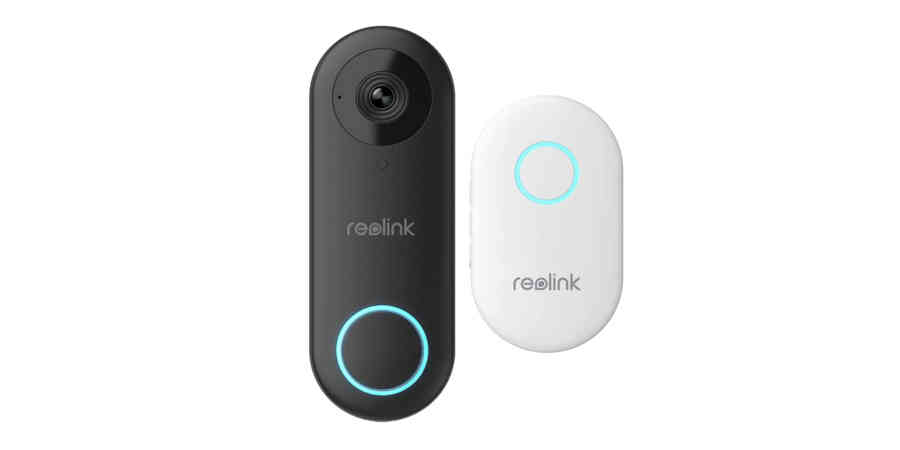
The one I latched on to after some research was the Reolink Smart 2K+ Wired PoE Video Doorbell with Chime. This is the Version 1 – it was only released late last year and only started shipping this year (there were lots of people complaining about awaiting shipment). So, remember what I said about being an early adopter.
Mine is on order (as of 4 June 2023), so watch this space for more detailed information. The Ring will be in the dustbin over the summer.
It’s 2023, and the warm Spring Bank Holiday weekend kick started interest in this article yet again. It was originally published in 2019.
Note that this article also applies to the JML InstaChill, Chill Tower, and any cooling device that costs under £100 and claims to just run ‘on water’ – even if it is manufactured by someone else.
In quick summary: these devices do not work to anything like the levels claimed. The original article follows.
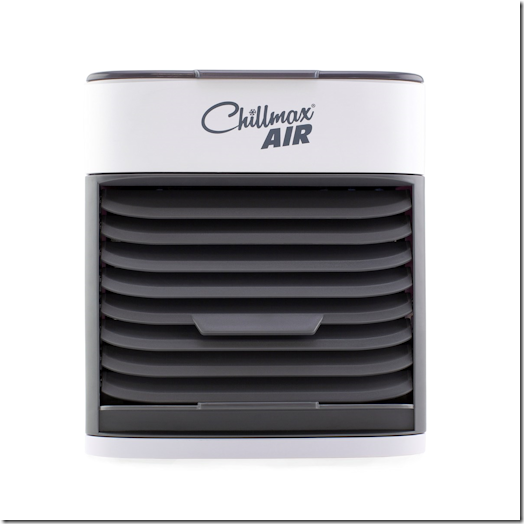
Early in July 2019, I saw the Chillmax Air advertised on TV in one of those shouty JML ads. That same evening, I was shopping in Asda and saw it on display. I am an idiot for things like this, and bought it on impulse so I could test whether it worked or not.
I’m a chemist, and I know that in order to cool a large space effectively you’re going to need something with a big fan and a special refrigerant. In practical terms, that means a fairly bulky device with a motor-driven compressor, a closed radiator for the refrigerant to pass through, a fan to suck air in and blow it across the radiator, and a wide exhaust pipe through the wall or window to get rid of the ‘removed heat’, and – in some cases – a drain for the condensed water which results from cooling the air. A typical proper air conditioner for a small or medium-sized room will be about the size of bedside cabinet. The Chillmax Air is not much bigger than six CD cases glued into a cube.
If you’ve ever used a normal desk fan you will know that you only feel cooler if you’re sweating a bit. That’s because the fan evaporates your sweat as it pushes air over it, and that evaporation is accompanied by a cooling effect – it’s called ‘evaporative cooling’. If you’re not sweating, you don’t feel the effect. Conversely, if the surrounding air is very humid, then no matter how powerful your fan is, you will feel little or no cooling because sweat can only evaporate if the air has capacity to hold additional moisture (I’ll explain that a bit more later, because it’s what determines whether the Chillmax is any good).
Many liquids exhibit the evaporative cooling effect. In the case of diethyl ether, for example (that’s the stuff they used to use as an anaesthetic), if you force it to evaporate very quickly you can even freeze water (if you do it properly). However, ether is both highly flammable and toxic, so apart from demonstrating it in the school lab (where I remember the fumes gave me a massive headache), it doesn’t have much practical application these days. Early refrigerators used it, which was spectacularly dangerous.
The Chillmax Air uses the evaporative cooling effect of water, and this is much less than with ether – similar to sweat, in fact. The unit consists of a reservoir at the top, which you fill with normal tap water, and this drips down on to a radiator unit which has ten sideways-stacked fibre panels in it through which a fan blows air. The water evaporates from the fibre panels, and the evaporatively cooled air comes out through the front grille. If you believed the ads, you’d be forgiven for thinking you’re going to get frostbite if you sit too close. I knew this wasn’t going to happen, but I wanted to know just how effective the Chillmax was.
When I first set it up and turned it on, the first thing I noticed was that the fan is quite powerful, so you get a good flow of air directed at you – but note that that it’s only a 5″ computer fan, so it can’t beat a proper desk fan for air flow. The air did seem a little cooler compared with what my desk fan was blowing at me, but it also felt ‘softer’ – that’s very important, and I’ll explain later. But the big question was how much cooler was the exhaust air?
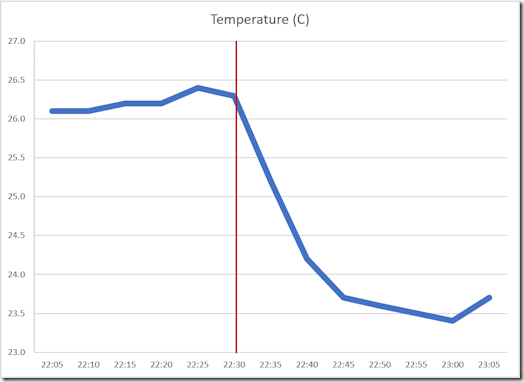
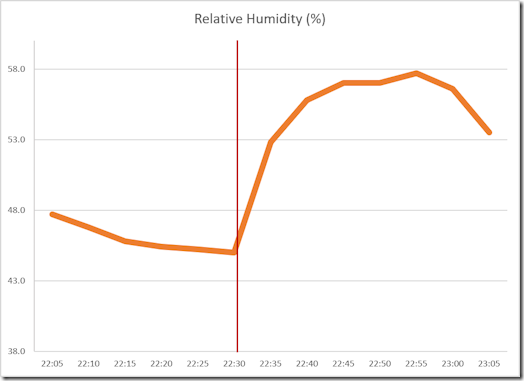
I fired up my trusty data logger and left it in front of my desk fan for 30 minutes for the control data. Then I powered up the Chillmax and moved the logger in front of it for the same period of time. This is what it recorded (the red line is where I moved it).
The ambient temperature where I ran the test was about 29ºC (this was just before the 2019 heatwave kicked in properly). The Chillmax brought this down by about 4ºC.
So, the Chillmax definitely cools the air that passes through it. Let’s work on the assumption that it would be able to get the same 4ºC drop no matter what the ambient temperature was. If your room is 38ºC, pulling it down to 34ºC still means it’s bloody hot. And also note that the Chillmax is physically quite small, so the cooling is very localised – it won’t cool an entire room down, and you have to have it less than a metre from your face to feel anything.
Now, some people might be thinking that a 4ºC is better than nothing at all. And they’d be right if it was just a matter of temperature. But there’s more to it than that. I mentioned that the exhaust from the Chillmax felt ‘softer’. I knew what it was, but my data logger shows it in numbers.
These are the data for relative humidity recorded at the same time as the temperature measurement, above (the red line is where I moved the logger). The humidity went up dramatically – a jump of about 30%RH.
As I’ve already explained, the Chillmax works by evaporating water on fibrous panels by forcing air across them. That water has got to go somewhere, and in this case it comes out with the cooled air as water vapour. In the right light, you can actually see it – it’s essentially fog, so the cooled air is also moistened. And just like when it’s foggy outside, and everywhere gets damp, this water vapour can condense on cooler surfaces. My data logger collected some and began to drip during the test, and I have since discovered that it also condenses on the front grille and can drip periodically, so you’d need to be careful what you had underneath it if you placed it on a shelf. The fan is quite powerful enough to project the drips forward slightly when they drop.
The ambient humidity in the room where I did the test was about 44%RH. The Chillmax sent that up to over 70%RH. It is this elevation of the humidity of the cooled air which really brings into question whether the Chillmax is worth the investment.
You’re probably aware that you can have a hot summer day in the high 20s where it is pleasant and comfortable, but a cooler and overcast day might be horribly sticky – or muggy. That’s because of the humidity, or water vapour in the air.
The amount of water vapour that air can hold varies with the temperature. Cold air can’t hold much, but warmer air can. At any temperature, once you reach the maximum amount possible, any extra vapour condenses out as liquid water – misted up windows, dampness, even drips and pools of moisture on window sills or under lamp posts. In winter, the condensation point is reached very easily, which is why you get your windows all steamed up and everywhere is often damp, but in hotter weather it is more appropriate to think ‘sauna’ (which is why it gets ‘muggy’). This air moisture is what we call ‘humidity’.
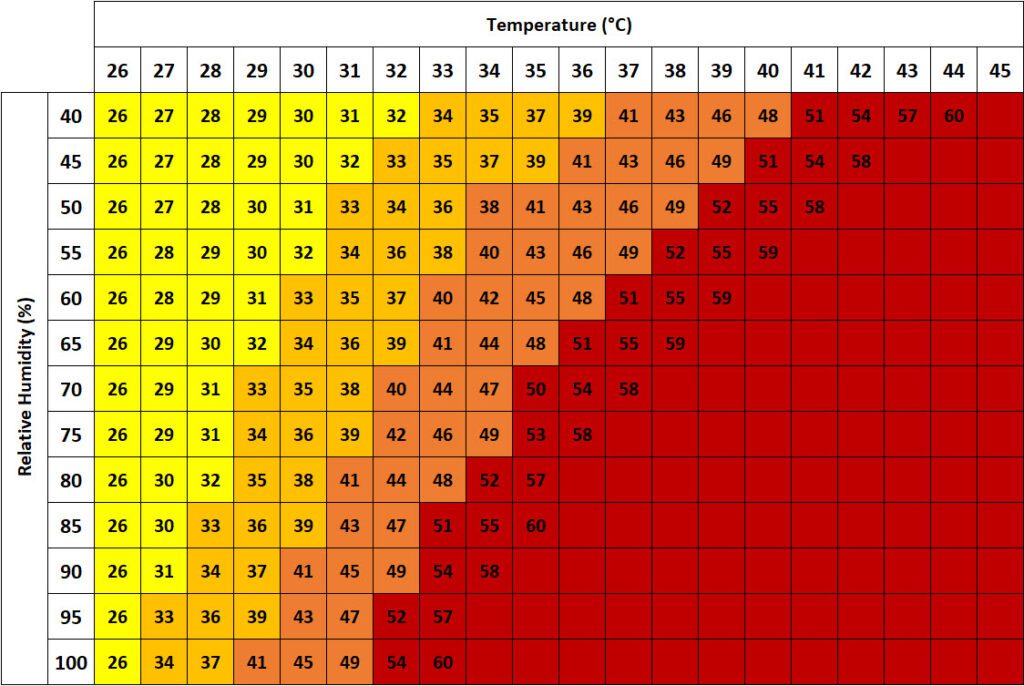
The term ‘humidity’ usually refers to the absolute humidity, which is amount of water in the air. However, the figure most people are referring to is the relative humidity. This is the amount of moisture in the air expressed as a percentage of the maximum amount it could hold at that temperature, hence the units %RH. It’s a complicated subject, but the important factor for us here is that when it is warm or hot, higher absolute humidity is uncomfortable because the amount of moisture in the air relative to the maximum possible is higher. Indeed, you may have seen weather forecasts where they give the actual temperature and the ‘feels like’ equivalent – that’s a reference to the ‘Heat Index’, which takes into account the effect of the %RH. Here’s a graphical chart for that.
As an example, if the air temperature is 30ºC and 50%RH, it will feel like 31ºC, but if the humidity goes up to 80%RH, then it will feel like 38ºC – even though the thermometer still tells you it’s 30ºC.
Another example. If the air temperature is 35ºC, at 50%RH it will feel like 41ºC, but send the humidity up to 80%RH and it’ll feel like 57ºC – even though the thermometer still reads 35ºC.
The calculation for this is complex (you should see how long my Excel formula for it is). It is non-linear, and the increase in ‘feels like’ is greater at higher temperatures. It also contains an element of opinion/perception, which is why there’s no point using numbers above about 60ºC. But the ‘Heat Index’ is what forecasters use. Incidentally, the official health designations for the colours are: yellow – caution; amber – extreme caution; orange – danger; and red – extreme danger. Vulnerable people need to take these into consideration before going out in hot weather.
However, this is where the problems come in for the Chillmax and similar devices. If it’s 35ºC and 40%RH, it’ll feel like 37ºC. Cool the air to 31ºC but send the humidity up to 80%RH, and it’ll feel like 41ºC. So it’s actually hotter in terms of comfort. Do the same comparison when the surrounding temperature is 38ºC, and the ‘feels like’ goes from 43ºC to over 50ºC!
At lower temperatures the Chillmax will produce a slight net cooling effect. But if the air temperature is above about 30ºC (and 50%RH) – which isn’t excessively hot or humid to start with, though it is around the point where you would start thinking about cooling things down – it’ll actually make you feel warmer. And if it is already humid outside, you’ll feel hotter still.
Proper air conditioners remove water from the air they cool. This removal of moisture is why the air from proper air conditioners feels crisp, as opposed to the ‘softness’ of moist air. The Chillmax does the opposite of normal A/Cs, and adds moisture.
Aesthetically speaking, the Chillmax is a cube – more or less – about 15cm along each side. There are two buttons on the top rear, one which changes the fan speed to one of three settings (or off), with a blue LED for each, and another button that turns the night light on or off. There’s a flap on the top front through which you add the water. The radiator system is a plastic-framed insert which you access by pulling the front grille out. It slots in and out easily. You can’t officially replace the fibre inserts in the radiator, but you can buy the whole radiator assembly from JML for £15. My only major gripe is the power cable. The jack plug that goes into the Chillmax is quite stubby and doesn’t go into the socket very far, so it is easy to dislodge it. However, the cable itself is quite long, and the mains plug is a moulded UK type.
JML claims the Chillmax can run for up to 10 hours per fill, but this is likely on the lowest of the three fan speeds, since on top speed it runs out in less than three hours. JML sells the humidification as a positive without relating it to the comfort relationship between temperature and %RH, but note what I said above. If you want to cool down in humid weather, it isn’t just the temperature that needs to come down.
Now. All of the above is an absolutely independent analysis. It came about simply from buying a Chillmax Air, testing it, then understanding what it was doing. None of the conclusions I arrived at were influenced by any other sources – I didn’t look it up first, nor have I had any inclination to do so since I first wrote the article. My measurements were factual, and my explanation was scientific. However, as of 2022 I decided to do just that and look up reviews of evaporative coolers. You might want to look at a few of these links, because I was right.
There are many, many more. And in every case, the relationship with humidity is the key. If it is already humid, evaporative coolers do not work and actually make things worse.
At the time of this most recent edit, it is 20 minutes past midnight on 19 July 2022 and the official Met Office temperature in Nottingham (where I am) is between 28ºC and 29ºC (it was just over 37ºC earlier on 18 July). Humidity is 35%RH, but it is up to 60%RH less than 40 miles away at the next Met Office station. In Nottingham, humidity peaked at 60%RH on 18 July, even if it dropped to under 30%RH at times. And that was outdoors – indoors you can add 30-40%RH without blinking.
Evaporative coolers are a big risk with the humidity we experience in the UK. And especially indoors.
Does it really work?
It does cool the air by a few degrees, so in that sense it works. However, it also sends the humidity up, and in most cases that actually makes you feel hotter and more uncomfortable. In that sense, it doesn’t work.
Will it cool more if I use ice water?
No. Evaporative coolers are not influenced significantly by the temperature of the water used in them. The temperature of the air that comes out depends on the temperature (and humidity) of the air going in, and the science of evaporation. Only this evaporation results in the cooling effect observed.
Will it cool more if I put the filter in the freezer?
It might – while you’re blowing air over ice. But once they defrost, which will happen in a few minutes in the temperatures you’ll likely be experiencing, then no. You’ll also have more condensate to deal with from the melted ice pouring out of the front grille.
You may see reviews on Amazon claiming that freezing the filters (or using ice cubes in the water tank) does give cooler air. Trust me – apart from what I just said about blowing air over ice, it doesn’t. Science is involved, and evaporative cooling doesn’t work like that.
Can I use it to cool my PC?
Someone found this article on the search term “jml chillmax air for pc cooling”. No. Blowing damp air into your PC would be dangerous, potentially expensive, and would only gain you 4ºC at best.
Can you get larger versions?
Until August 2021, the answer in relation to the ChillMax was no. However, I saw an advert (as shouty as usual) for the InstaChill tonight. Unlike the ChillMax, which is the size of a small table top radio, the InstaChill is the size of a bedside cabinet. And you can certainly get larger evaporative coolers from other manufacturers. The working principle is identical, except that the larger the surface area of water, and the greater the airflow over that water, then the greater will be the possible drop in temperature at the front end (and the more moisture being pumped out to increase the humidity). However, cooling effectiveness is influenced greatly by the RH of the air going in.
If the air is very dry, then a large evaporative cooler might be able to drop inlet air at 30ºC down by as much as 10ºC. However, if the inlet air is very humid, the temperature drop could be as little as 1ºC. In the UK, the realistic temperature drop you could expect on a non-humid day for a large cooler would be around 5-6ºC, but on a sticky day you’d only get about a 3ºC drop.
Suppliers of these devices say that they need good ventilation or extraction, and I would imagine that’s so the humid air can escape. If you’re evaporating more water to get better cooling on larger devices, you’re also producing a lot more water vapour, so the cooling effectiveness will decrease as the humidity rises unless you vent it somehow. Be careful if you read any of the reviews on these things – people may have noticed cooling in already cooler conditions, but trust me – if it’s very warm and humid, you will not notice any effect.
People say it works
Be careful when you read those one-line reviews. If you test it when it’s only 20ºC outside – as many of these people have – then yes, it blows noticeably cooler air at you. But science is involved, and at temperatures above about 28-30ºC you’ll actually feel hotter. The fact that it increases humidity is the key factor. Remember that the reason you even found this article was probably because it’s over 30ºC outside – the more above that it is, then the more hits I get.
So, does the Chillmax/InstaChill work?
They cool the inlet air by several degrees. But they send the humidity of that air up considerably, and this cancels out the benefits of the cooling effect when it is very hot. The ‘Heat Index’ is the key detail, as explained above. In the case of the InstaChill, it will add a lot more humidity than the ChillMax, and as I have explained and demonstrated, the ChillMax is bad enough when it comes to increasing the ‘feels like’ temperature.
Only the air being directed at you is cooler. Once that slightly cooler air has passed through warmer air, it’ll be close to ambient again. The device cannot cool down a room. It’s far too small for that.
Humidity can carry much further, though, and it hangs around unless it condenses out somewhere. So in a small room, you could easily increase the ‘ambient’ RH without any cooling at all, and that will make it feel even hotter. If it is already hot, the amount of water vapour the air can hold before reaching 100% RH will be substantial. The increased humidity of the outlet air does produce localised condensation, so you have to be careful to keep these devices away from electrical sockets where they might drip on them, and there is also the risk of dampness in your home and the problems that it can cause. The devices also contain a significant volume of water when full, so you don’t want to knock them over.
Should I buy one?
My advice is to buy a proper air conditioner (A/C). If anything costs under £200 it is not a proper A/C. However, it is possible some people might find the minor cooling effect and increased humidity of the Chillmax/InstaChill (and similar devices) beneficial, so the choice is yours. But for real cooling and dehumidification when it is hot, it has to be a proper A/C.
Quite a few years ago, I wrote about Secret Escapes, and it’s inane fascination with whispering. In fact, I wrote about it four times (two separate ads), here, here, here, and here.
Those were in 2012 and 2014.
But bugger me, they’ve managed an even more annoying whispering pile of crap in 2023.
I’m not going to provide a link. The sooner they go out of business, the happier I will be. I hate whispering, and this company hasn’t got a clue. And the evidence suggests a lot of other people dislike it as much as I do.
The thing is, I haven’t got a clue what it is they actually do – I switch channels the moment I hear the whispering. And TRESemmé had better watch out. I use their products, but their current whispering ad is driving me nuts. My general policy is to boycott companies who annoy me, and TRESemmé is doing that right now.
I know this makes me look like a hypocrite, but read on.
Most readers will know that I display ads on this blog. They are purposely not intended to be obtrusive, and I only put them at the end of articles (sometimes in the middle if it’s a long article). The ones at the end/middle of articles are Google ads, and the content is random (as is the one shown in the sidebar). I refuse outright to include pop ups, and I don’t control what any of them show (it’s either random, or based purely on the reader’s browsing habits, and nothing to do with me).
I sometimes use very specific ads pointing to products I am recommending within the article, and those are usually Amazon or eBay ones. I never consciously put ads on pages announcing deaths or other serious issues (I consciously don’t unless I made a mistake).
I do earn a small amount of revenue from the ads, but I’m never going to be able to retire on it – I just get a £60 deposit into my bank account every now and then when I hit that figure.
When I am browsing myself, I have no problem with normal ads. If I see one of interest, I will click on it. But I draw the line at repeated and obtrusive pop-up ones, and those local newspaper websites which are run collectively by The Mirror Group (also known as MGN, and part of Reach PLC). With those, the entire page is filled with ads and pop-ups.
For some years, I was using AdBlock Plus to stop them, and was very happy with it. However, I have tried twice recently to upgrade to the subscription service they offer due to some ads not being blocked in the free version, and it simply wouldn’t install. Oh, Eyeo GMBH (the software owner/publisher) happily accepted my subscription, but the upgrade simply wouldn’t do anything, and the installer told me to contact tech support. I did that, and they were fucking useless. Twice. They hadn’t got a clue what they were talking about and did the usual trick of trying to get me to uninstall things as if it were my fault, and then wanted me to try subscribing again – even though I had a clear active subscription to them within PayPal (actually, I had two subscriptions already, the first from an attempt in January to upgrade). No way was I going to set up a third.
I washed my hands of them there and then, removed AdBlock Plus from my system, cancelled the original subscription, got a refund for the second, and then went looking for an alternative. I soon found uBlock Origin.
This is what my local newspaper looks like without an ad blocker:
Let’s be clear, this is quite tame compared with what can happen on some pages. The web designers are amateurish beyond belief and can make it ten times worse than this quite often. All Reach/MGN websites – virtually every local news outlet in the country – is exactly the same. But this is what it looks like with uBlock Origin enabled:
It gets rid of everything. And this is what an article with an embedded video looks like:
That image is a frame from a video, which actually loads and plays – AdBlock would just block the video. And it also blocks ads on YouTube videos, so you don’t get a load of crap before the content you want.
First of all, uBlock Origin is open source, so it doesn’t cost anything. You can’t even donate (because I would if I could) – they refuse donations outright. But it bloody well works like all get out. It seems to stop everything, especially the ones that had begun to creep through with MGN/Reach.
As I said, a major benefit is that whereas AdBlock prevented videos being loaded or displayed (they’d just buffer permanently), and there appeared no way to get round that, uBlock doesn’t – but it still suppresses all the annoying ads. And disabling it then re-enabling it is extremely easy if something you want to see is blocked.
It is very light on resources, too. It runs on most popular browsers as an extension. I really recommend it.
My local ‘newspaper’ is often good for a giggle. Most of the major news is to do with restaurants/shops opening, restaurants/shops closing, ‘disgusted’ and ‘horrified’ people posing with funny expressions concerning all manner of issues (such as restaurants/shops opening or closing), and their favourite: the weather.
All through winter, they have been warning of blizzards and sub-zero temperatures. None of them happened. Occasionally, there would be talk of floods of Biblical proportions. None of those happened, either.
Now summer is approaching, it’s the heat. It’s not actually hot yet, but they love making comparisons with other places. It’ll be hotter than Marbella. Or hotter than Cyprus. And so on.
But today it was announced the forthcoming weekend will be hotter than… Prague (have an ad-blocker ready). I don’t think I have ever wondered what the weather is like in Prague in order to compare it with ours. And I’m bracing myself for follow-up stories with photos of ‘disgusted’ and ‘horrified’ people scowling and pointing at the sun.
This is bad news (but note the updates at the end of the story).
Whenever I go to a gig at Rock City, it is automatically followed by a curry at the Mogal. It’s been that way for the last 30 or more years. But it appears that the Mogal has gone into liquidation and is now boarded up. A sign on the boards says ‘Under New Management’ – though precisely what that means is unclear right now.
It was always a little unclear figuring out who actually owned it. The article refers to Sheikh Assab, and he was certainly managing it prior to the Covid pandemic – I didn’t realise he was an owner. He was a really friendly guy, and the food was top notch most of the time. Things changed a little about five years ago. Sheikh Assab told us they had ‘a new chef’ – it seems the original chef was Sheikh Sujat, and I think he was one of the owners. With the new chef, the Pilau Rice had sweetcorn and peas in it, and tasted more like some sort of chicken-flavoured packet meal (we complained, and it was proper Pilau the next time). And the Chicken Tikka starter used to consist of chunks of Tandoor-cooked chicken on a sizzle plate on a bed of fried onions, and scattered with fresh Coriander. With the new chef, it became bite-sized pieces covered in odds drizzles of sauces – one of which was a green Coriander puree – which tasted nothing like Chicken Tikka (we complained about that, too, but it remained). But the main curries were always pretty good.
After Covid, when we started going again, all the staff were strangers, and not as friendly as before. We asked if ownership had changed, but they said ‘no’. We knew something had happened, because it was so different, but everything was so secretive you just never found out the truth. I am guessing that the tough financial times had brought retirement forward for some members of the family, and the younger ones just weren’t interested anymore. My guess is that Sheikh Sujat had already retired when the ‘new chef’ came in. It’s a shame.
I hope Sheikh Assab is all right (and Sheikh Sujat) – as I say, he was a really nice guy, and sometimes we’d talk to him the whole meal (when the idiotic Brexit result came about being one such example).
Being situated next to Rock City and the Royal Concert Hall, it used to be where many of the performers went if they liked curry. As a result, one of the walls was filled with signed photographs of celebrities who had eaten there, many of them A-listers. We’ve seen several bands in there after we’ve been to a show.
The thing about the Mogal – at least until around 2015 – was that it was old-school. It was what an Indian restaurant should be like. Heavy wooden seats, traditional décor, and proper curries. None of this brightly neon-lit ‘contemporary’ crap so many other restaurants move into, or attempts to produce works of art on the plates. Although the décor didn’t change, the food most certainly did at the Mogal – that Chicken Tikka I mentioned was a prime example, and although the chef no doubt thought it looked good, it didn’t taste as good as the original (and proper) version.
Anyway, the big question is: what happens to the place now? The boards say ‘under new management’, but that doesn’t mean anything in Nottingham. The ‘new management’ could easily be a student letting company, and it would come as no surprise to see the place turned into student flats – Nottingham City Council has done that everywhere else in that area, so a restaurant is a bit of an anomaly there.
Surprisingly, Nottingham City Centre doesn’t have many normal Indian restaurants – they’re all ‘contemporary’, or have some ‘angle’, where the chances of getting a decent Vindaloo or Madras are zero, you can’t get Chicken Tikka (but you can get Ostrich Tikka or Salmon Tikka), and the prices are double what you pay anywhere else. And they are a 20 minute walk away, instead of the sub-1 minute trip to the Mogal.
Even if it remains a restaurant, there’s no guarantee it will be an Indian one, and even less guarantee it won’t try and go contemporary.
Fingers crossed.
Update September 2023: The Mogal-e-Azam website has been stating that it is closed for refurbishment for some months. And news from this week reports that they are currently hiring staff (use an ad-blocker for that link).
Update October 2023: Latest news is that it is now reopened.